American agriculture uses about 80% of the freshwater consumed in this country. It pays almost none of the market price for it. That gap between consumption and cost is the defining infrastructure story of the next two decades — and it's barely in the conversation.
Water has been essentially free for most Western irrigation agriculture for the better part of a century. Groundwater rights tied to land. Canal water priced at 1970s infrastructure cost recovery. Surface water allocations that made sense when the Colorado River reached the sea, which it hasn't done reliably since the 1990s.
We started building our water thesis at Lakefusion in 2017, when the Ogallala Aquifer decline was already generating alarming data and before anyone was talking seriously about trading water rights. Since then the picture has gotten clearer — and bleaker. Here's what we see.
The Pricing Gap Is Structural, Not Temporary
A farmer in western Kansas might pay $15–$30 per acre-foot for groundwater when the honest infrastructure-replacement cost of that water system exceeds $200 per acre-foot. A water broker in Arizona might sell agricultural water rights for $1,500–$4,000 per acre-foot to municipal buyers. The same water. Orders of magnitude apart in price depending on who needs it and how the original allocation was priced.
This isn't a market inefficiency you arbitrage away. It's a structural artifact of water law, political economy, and the fact that federal water projects were built with cost recovery tied to generations of repayment at zero interest rates. The cheap water era isn't ending because of technology or markets. It's ending because there is physically less water.
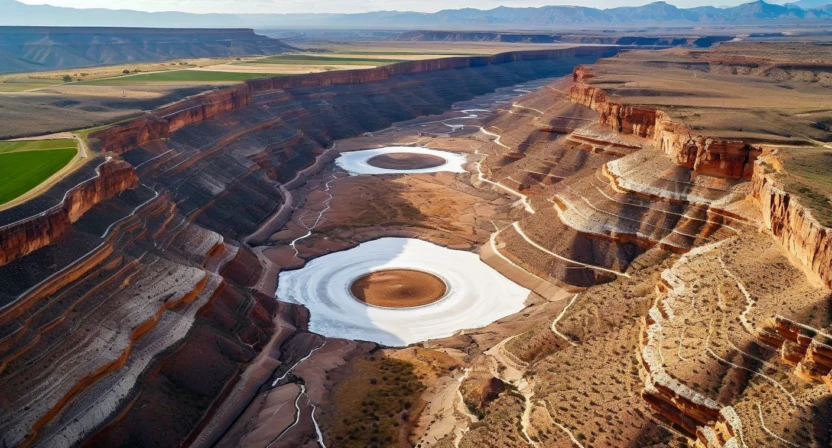
The Ogallala has lost roughly 9% of its total saturated thickness since the 1990s. Parts of western Kansas and the Texas Panhandle have lost 50% or more. When the water's gone, it's gone — recharge rates in the deep formation run 0.1–0.6 inches per year against irrigation withdrawals measured in feet.
Where the Investment Opportunity Is
We are not interested in water trading platforms as a primary investment thesis. Water rights trading raises legitimate concerns about commoditizing a public resource, it's heavily regulated, and the political exposure for a VC-backed company in that space is significant.
What we are interested in is the infrastructure layer that helps agriculture do more with less water. Three specific categories:
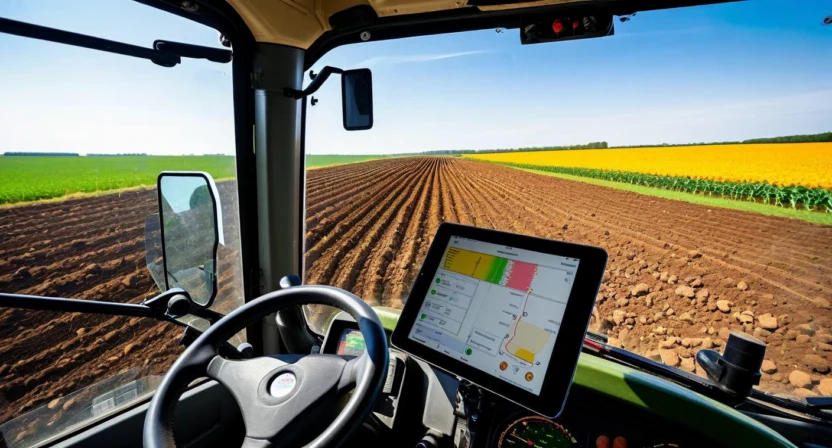
Monitoring and measurement. You can't manage what you can't measure, and most agricultural water use is still estimated rather than measured. Subsurface sensors, satellite-derived evapotranspiration models, and real-time meter networks are all underpenetrated. The cost of sensor hardware has dropped by roughly 70% in the last decade. The deployment economics now work at farm scale.
Precision irrigation. Drip and subsurface drip systems consistently reduce water use by 30–50% compared to flood or center pivot systems. The barrier is upfront capital — $800 to $1,500 per acre for a drip conversion — and the agronomic knowledge to run it. Companies that solve the financing and the knowledge transfer side of that equation have a real market.
Water recycling and recirculation. Aquaculture and controlled environment agriculture are proving out closed-loop water systems that reduce consumption by 85–95%. These technologies are starting to migrate to field agriculture contexts, particularly for high-value crops. The economics are challenging in commodity row crops but compelling in produce.
The Regulatory Tailwind
For the first time in a long time, we're seeing genuine regulatory movement on agricultural water. The Sustainable Groundwater Management Act in California is forcing adjudication of basins that have been over-pumped for decades. Arizona's groundwater crisis has pushed water to the top of that state's political agenda. Several Great Plains states are actively studying withdrawal limits on Ogallala use.
Regulation creates compliance demand. When a grower has to demonstrate reduced extraction or get out of the water market, tools that help them reduce extraction have a real buyer. That's different from selling into a purely voluntary market.
We've made four water tech investments since 2017. In each case, the core thesis was the same: the companies that help farmers grow more food per unit of water will have the strongest tailwind in agriculture over the next 20 years. The asset is getting scarce. The demand for food isn't.
What We're Still Watching
Water tech for agriculture remains underfunded relative to the scale of the problem. Total VC investment into ag water technology is measured in the hundreds of millions annually against a market opportunity that's measured in the hundreds of billions.
We think the next wave of interesting companies will come from a few places: better real-time monitoring that can be deployed at scale in commodity crops without requiring an agronomist on every farm; financing structures that make precision irrigation economically accessible to mid-size operations; and data-driven water market transparency tools that help growers make better allocation decisions without needing to enter a liquid rights market.
If you're building in ag water, we'd like to talk. The problem is real, the timeline is urgent, and the funding gap is large.