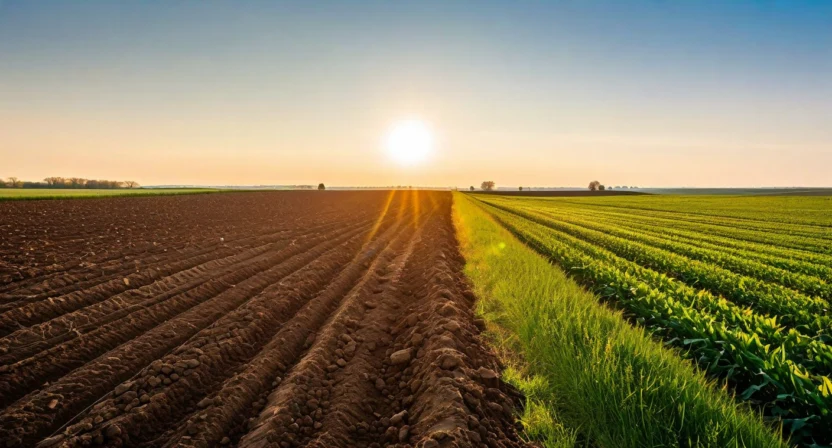
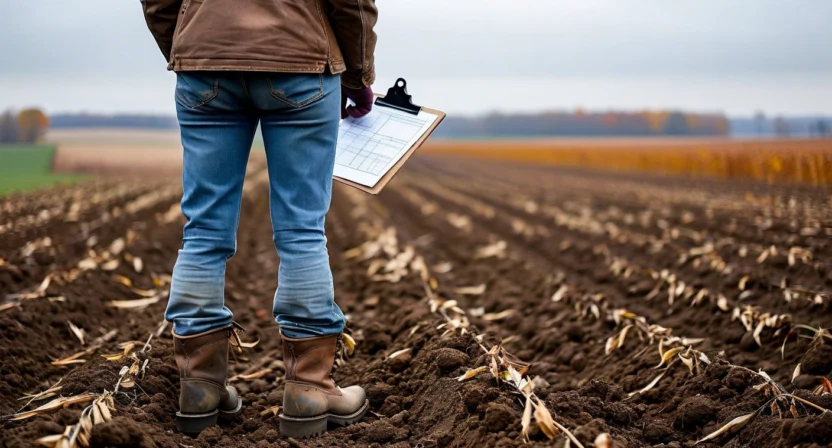
We write one of these every year. Not to generate deal flow — we have more deal flow than we can process — but to force ourselves to put our actual views on paper where we can be wrong in public and learn from it. Here's what we think is happening in ag and climate tech in 2025.
The Macro Context
The last two years in climate tech have been a story of triage. The money that flooded the category between 2020 and 2022 — a lot of it from generalist funds that decided climate was the next big theme — has largely moved on or dried up. What's left is a smaller, more focused investor base that understands the underlying science, the commercial timelines, and the specific dynamics of each subsector.
This is healthy. The companies that have continued to raise and grow through the tighter capital environment are the ones with real customers, real revenue, and defensible technology. We've watched several well-funded companies in our category fail because they built headcount and infrastructure on the assumption that the 2021 funding environment was permanent. It wasn't.
For founders in ag and climate: this is an excellent time to be building. Less noise, more signal. Serious investors are active. The companies that have survived the triage are stronger for it.
What We Think Is Working
Biologicals and soil health. The transition from synthetic inputs to biological alternatives is the slowest-moving but most durable trend we track. Biological soil amendments — microbial inoculants, biostimulants, bio-based fertilizer supplements — have moved from specialty positioning to mainstream consideration at major row crop operations. What changed isn't the science; the science has been solid for years. What changed is enough years of data from commercial-scale trials that agronomic advisors are now comfortable recommending biologicals to their clients.
The companies we're most interested in are the ones that have multi-year field data showing consistent yield effects across variable weather conditions. Single-year plot trials are noise. Six years of data across Iowa, Illinois, and Indiana in wet and dry years is signal.
Water monitoring and efficiency. We've written about this separately, but it bears repeating: water technology is structurally underinvested relative to the problem. Companies that can deliver demonstrable water use reduction at farm scale — measured, documented, verified — are entering a market that is increasingly regulatory-driven and increasingly less optional.
Carbon market infrastructure. Not the carbon credit prices themselves, which remain volatile, but the measurement and verification layer underneath. The companies building rigorous, scalable soil carbon measurement are building something that will be valuable regardless of whether voluntary carbon prices recover. Regulatory compliance markets are developing in multiple jurisdictions that require measured data, not just modeled estimates.
What We Think Is Still Figuring It Out
Precision fermentation for food applications. The technology continues to improve. The cost curve continues to decline. But "continuing to improve" and "reached commercial viability at scale" are not the same statement. Our current view is that precision fermentation for specific high-value applications — particular dairy proteins, specific flavor compounds, pharmaceutical-grade proteins — is closer to commercial viability than fermentation for commodity protein replacement. Category-wide, we'd put the timeline at 3–5 years before we see multiple durable, profitable businesses.
Regenerative certification and labeling. The market for premium pricing on regeneratively produced goods is real in some channels and illusory in others. Foodservice buyers at premium restaurants are paying documented premiums. Mainstream grocery retail is more skeptical. The companies building the certification and supply chain traceability infrastructure for regenerative claims are making a bet on how quickly that premium market expands. It's a real bet with real uncertainty.
Autonomous farm machinery. Full autonomy in agricultural field operations remains further out than the press coverage suggests. The technology for narrow, well-defined tasks — autonomous row crop cultivation, GPS-guided straight-line planting passes — is proven. Full autonomy across the operational complexity of a working farm, in variable field conditions, with the reliability standards that agriculture requires, is a harder problem. We're watching this space but not actively investing.
Where We're Placing New Bets in 2025
We expect to write 4–5 new checks this year. Three focus areas.
First, the measurement layer. Across soil carbon, water use, biodiversity, and nutrient loss — there is a generation of measurement infrastructure that needs to be built for agriculture to participate in ecosystem service markets at scale. We're specifically interested in companies that combine novel sensing approaches with strong agronomic modeling.
Second, climate-adapted seed and crop management. The crops that were optimized for the climate of 1990–2020 are going to face increasing stress from the climate of 2025–2040. Heat tolerance, drought resistance, and flood recovery are agronomic attributes that have real market value with specific buyer populations right now — not theoretical future value. We're looking at the breeding and crop management layer specifically.
Third, agricultural supply chain decarbonization. The emissions embedded in food supply chains are enormous and largely untracked. Companies building the tooling for Scope 3 agricultural emissions accounting — helping food companies understand and reduce the emissions in their supplier base — are in an early but growing market driven by corporate sustainability commitments with real regulatory backstop in some jurisdictions.
The Honest Version of Our Portfolio Performance
We have 31 companies. Nine have had liquidity events. Of the 22 active companies, eight are performing materially above our entry expectations, nine are performing in-line, and five are in challenging situations. One of those five we believe will find a path; the other four are likely write-downs.
That distribution isn't radically different from a typical early-stage portfolio, but the specific shape of the failures is instructive. Every company in the challenging category either: overestimated the speed of adoption of a novel practice, underestimated the cost of reaching farmers, or raised too much capital before understanding whether the unit economics actually closed.
The failure mode we see most consistently in ag and climate tech is not bad technology. It's good technology built for a business model that couldn't survive contact with real customer acquisition costs and real selling cycles.
A Few Things We've Changed Our Minds About
We were more skeptical about blockchain-based supply chain traceability than we should have been. Not as a speculative technology — we're still skeptical of that framing — but as a practical tool for documenting chain-of-custody in regenerative supply chains. Several implementations we've looked at recently are genuinely useful and cost-competitive with paper-based equivalents.
We were more optimistic about the pace of agricultural water market development than the data supports. Formal water markets at scale in US agriculture are probably 10–15 years out in most jurisdictions. The informal efficiency market — helping growers reduce water use before they're forced to — is the more immediate opportunity.
We're more interested in the US Great Plains than we were three years ago, specifically because the Ogallala depletion timeline has become clearer and because several strong founders have returned to Kansas, Nebraska, and South Dakota after stints in coastal tech centers. There's a generation of operators who grew up in production agriculture, got CS or biology degrees at state universities, and want to work on the problems they know. That's exactly the profile we want to back.
If any of this is relevant to what you're building, reach out.