Plastics replacement has been the perennial "almost there" story in materials for a decade. The technology demonstrations are compelling. The economics are difficult. And the supply chains required to deliver cost-competitive bio-based alternatives at industrial scale are genuinely hard to build.
But something shifted in the last two years that we think changes the calculus. It's not a single technology breakthrough — it's a convergence of regulatory pressure, corporate sustainability commitments with actual teeth, and a quiet maturation in feedstock logistics that's making agricultural waste a viable raw material at meaningful volumes.
The Feedstock Story Has Changed
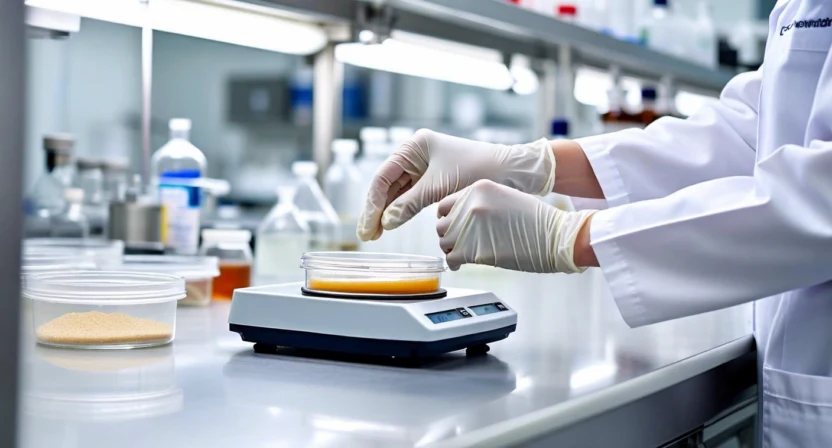
Mycelium composites — materials grown by inoculating agricultural byproducts with fungal mycelium — have existed in proof-of-concept form since the late 2000s. The early demonstrations were impressive. A packaging block grown in a mold from corn stalks and hemp hurds, fully biodegradable, structurally competitive with expanded polystyrene. You can literally throw it in your garden.
The problem was feedstock consistency and availability. Mycelium growth requires specific moisture content, particle size, and carbon-to-nitrogen ratios. Getting consistent inputs from agricultural processors — who historically had little incentive to standardize their waste outputs — was expensive and operationally messy.
What's changed is that several large-scale agricultural processors have started treating their residue streams as a product rather than a disposal problem. Corn processors, hemp processors, and soy crushers are now in conversations with biomaterials companies about supply agreements that specify consistent feedstock parameters. That's a different market than scrounging for inconsistent bales of leftover material.
Where Adoption Is Actually Happening
The honest answer is that adoption is still early and concentrated. But the segments where it's happening are telling.
Electronics packaging. Several consumer electronics brands have piloted mycelium-based protective inserts as a replacement for expanded polystyrene. The performance specs are competitive at the thicknesses needed for electronics protection, and these brands face strong brand pressure to reduce single-use plastics. Mycelium inserts are not yet cost-competitive with EPS at full scale — roughly 1.5–2x the cost per unit — but the premium is within range of what sustainability-committed buyers will pay.
High-value agricultural inputs packaging. Seed companies and specialty input manufacturers are early adopters for their premium product lines. The logic is simple: if you're selling a $400-per-acre seed treatment, the packaging cost premium for a compostable container is trivial relative to the product margin and the brand signal it sends to growers who care about soil health.
Construction and architecture. This is the longer-term opportunity that gets less attention. Mycelium composites have structural properties that are competitive with medium-density fiberboard in some applications, at significantly lower embodied carbon. Several architecture firms have used mycelium panels in interior applications. The regulatory pathway for structural applications is longer, but the total addressable market is enormous.
Starch-Based Materials: The Quieter Story
Thermoplastic starch — derived from corn, cassava, or potato — has been around longer than mycelium composites and is further along the commercialization curve. The challenge with starch-based plastics is moisture sensitivity and mechanical properties at high humidity. Recent formulation work using blends with polyhydroxyalkanoates and cellulose reinforcement is extending the performance envelope significantly.
We've been particularly interested in plant-derived binder systems that replace petrochemical adhesives in composite wood products and ag supply chain packaging. The binder market is less visible than structural packaging but it's large — and a switchover from petrochemical to bio-based binders in a single large OSB or particleboard facility represents meaningful volume for a supplier.
The Investor's View on Timing
We've made two investments in the biomaterials space, both focused on the ag-waste-to-material conversion piece rather than the finished product brands. Our view is that the materials layer — the companies converting agricultural residues into consistent, scalable bio-based material inputs — is better venture risk than consumer-facing packaging brands that have to both develop materials technology and build distribution simultaneously.
The companies we want to back are the ones that have figured out how to get consistent feedstock, run a reproducible process, and sell to industrial buyers who care about specifications more than sustainability narratives.
The narrative-first biomaterials companies — the ones where the story is "replace all plastic" and the business plan assumes rapid consumer adoption — are mostly not what we fund. The ones that are quietly signing supply agreements with food processors and furniture manufacturers? That's where we're paying attention.
If you're building in this space, we'd like to hear from you — especially if you have repeatable feedstock sourcing and real industrial customers already.